Product Design · FigBuild 2026
Presence
A speculative wearable that notices when your mind drifts from the moment you're in, and gently helps you come back. Designed in 48 hours at FigBuild 2026.
30-second summary
- Status
- Hackathon concept · FigBuild 2026
- My role
- UX / product designer on a team of four: research mapping, interaction logic and the companion app.
- Constraint
- 48 hours, an invisible behavior to design for, and a hard line: it couldn't become another productivity or surveillance tool.
- Key decision
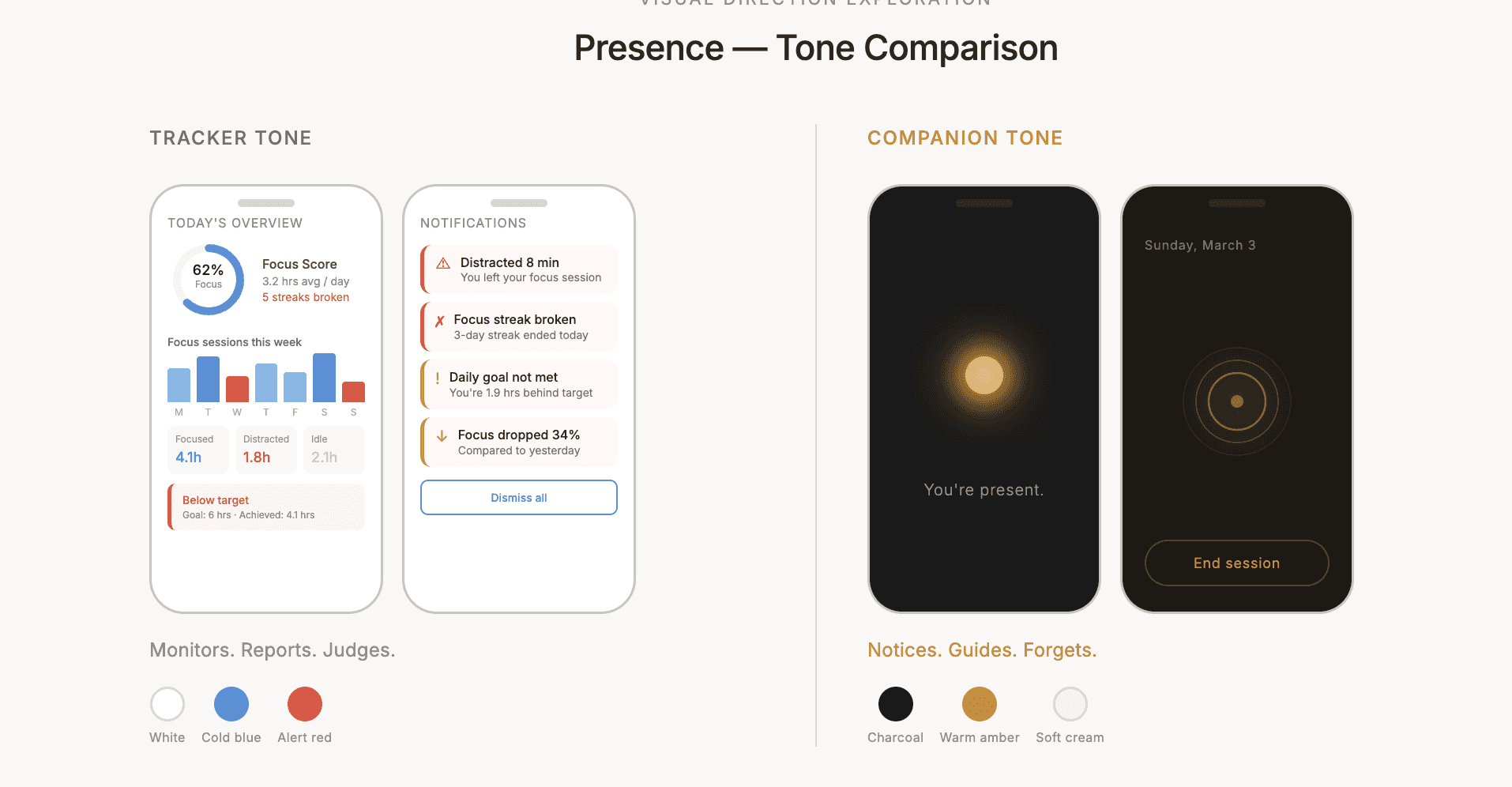
- Design around the return, not the alert. One soft, private cue, and no streaks, scores or guilt.
- Scope
- Speculative concept and interactive prototype built in Figma Make.
Problem
People are often physically present but mentally somewhere else — eating without tasting, reading a page without taking it in, missing half a sentence in a conversation. We usually notice only after the moment has passed. Focus tools answer this with more interruption: pings, timers and scores.
Solution
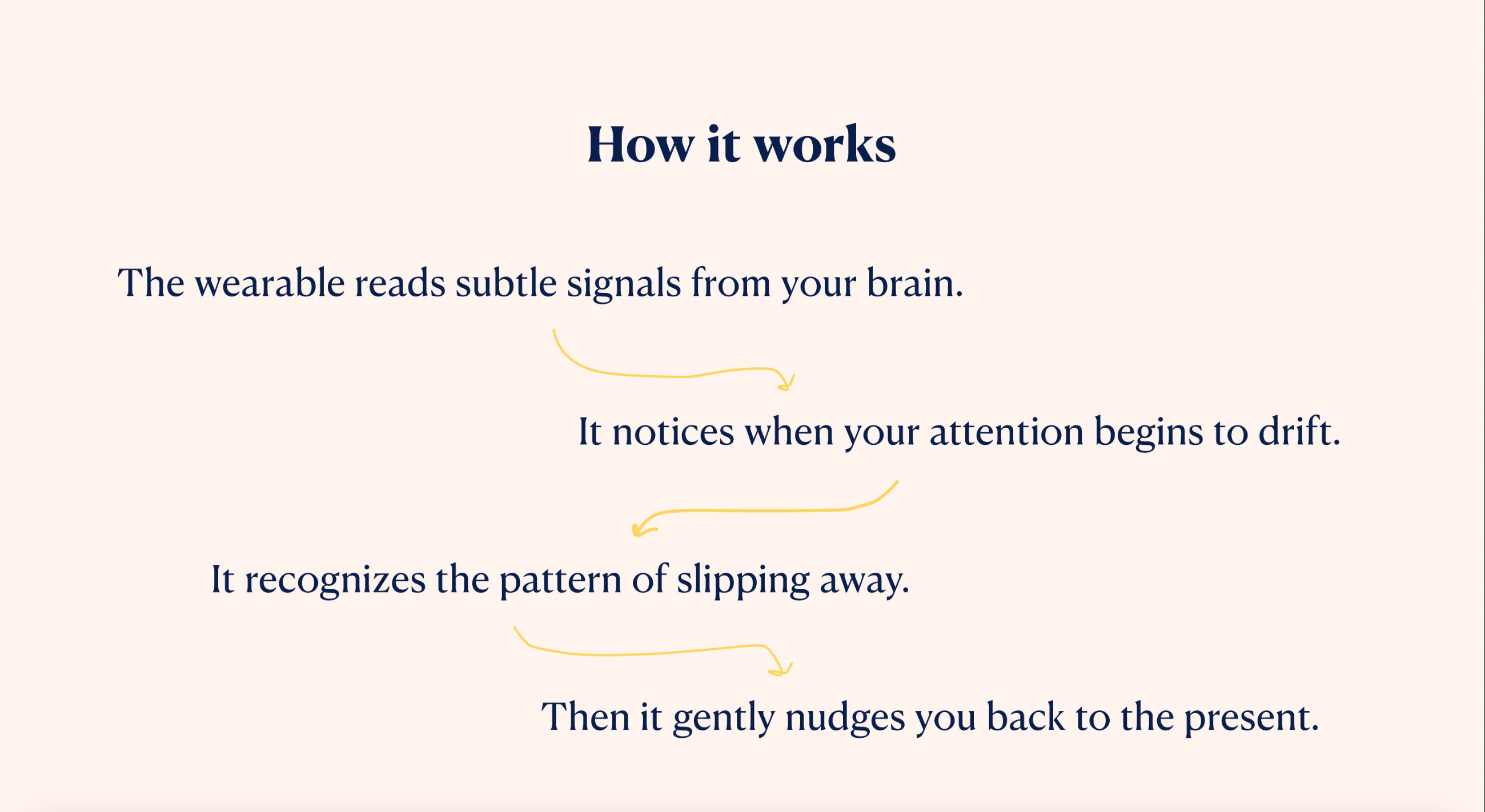
Presence is a speculative wearable — a ring, watch or bracelet — that notices when attention drifts and gives one gentle, private cue to return. A calm companion app shows reflections and presence patterns, so people understand their attention without being judged for it.
Inspiration
The wrong door
It started with a story. One of us had walked to the wrong floor of her building and knocked on a stranger's door, noticing only when it opened that she'd been on autopilot. It was funny for a second, then it made us pause: how often do we move through a day without really being there?
01
Meals
Finishing a plate and barely tasting it.
02
Reading
Reaching the bottom of a page and remembering none of it.
03
Conversation
Realizing mid-sentence that you missed what someone said.
Discovery
The problem isn't distraction
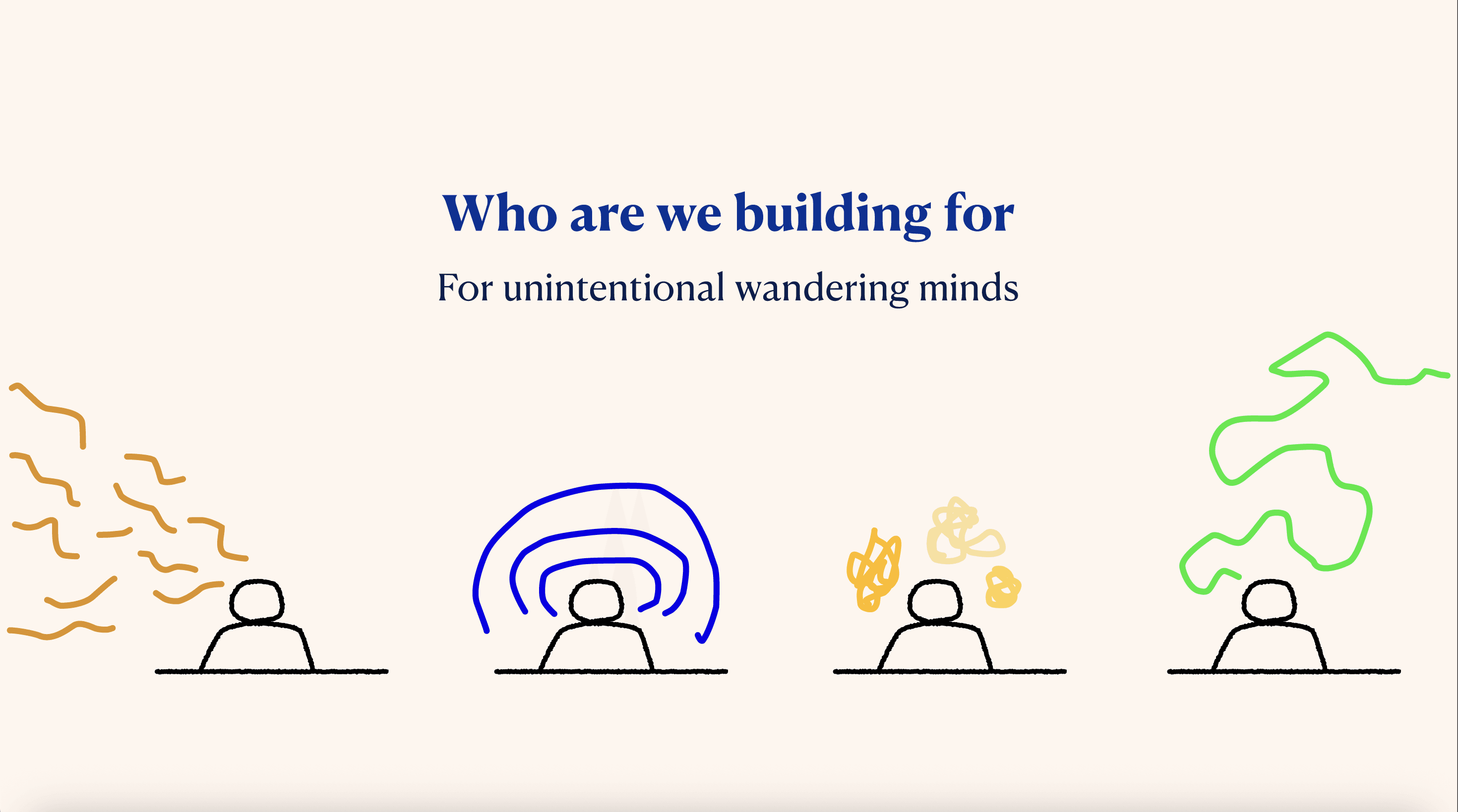
We talked informally with people about moments they realized they hadn't been fully present. Almost everyone had one: missed parts of conversations, meals they couldn't remember, days that blurred together.
The problem wasn't distraction alone. It was the lack of awareness when attention drifts.
That reframed the brief. We weren't designing a focus tool. We were designing a moment of noticing.
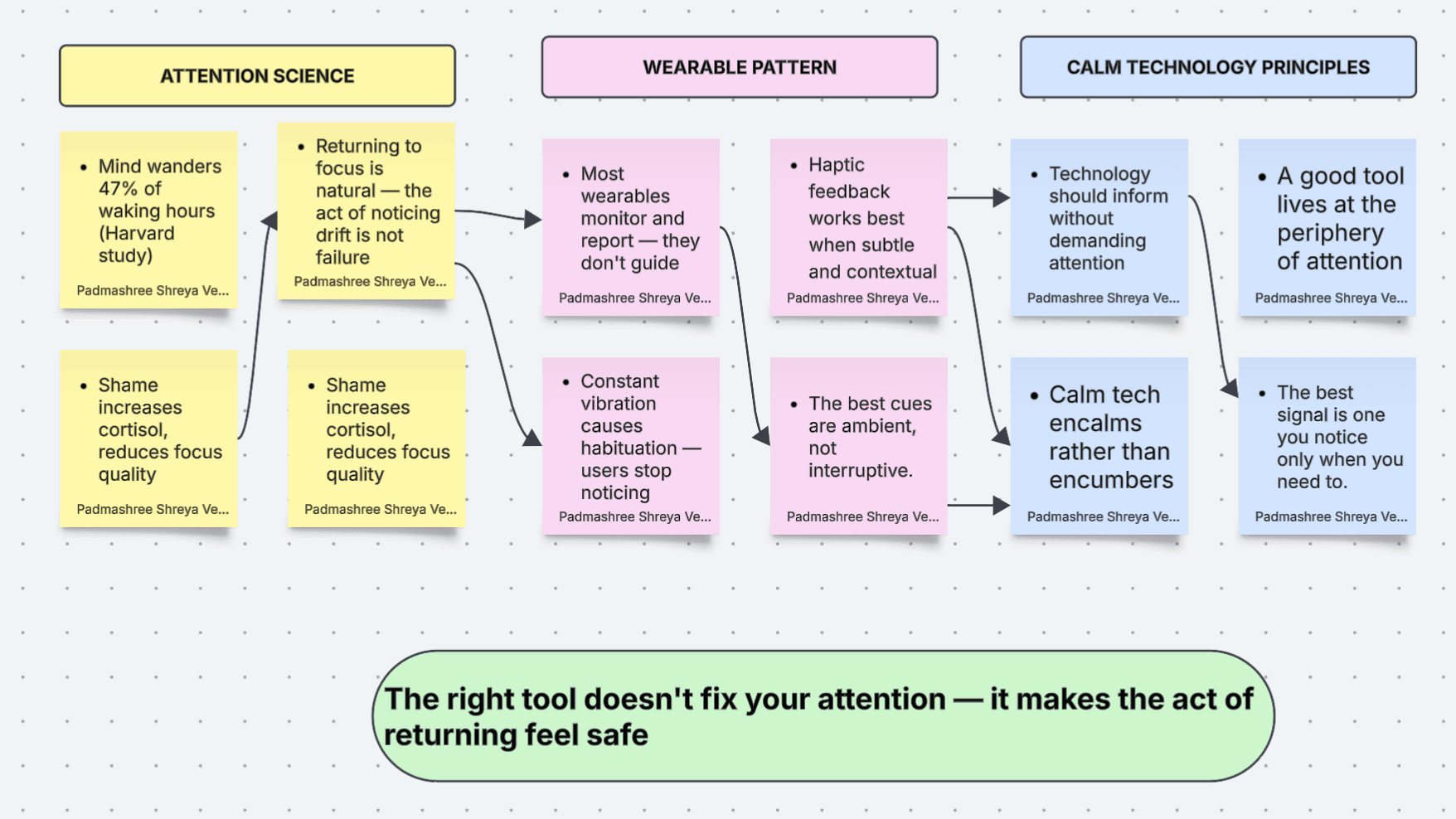
Research map 1 / 3
Ideation
Mapping where attention goes
The topic was broad — sensory experience, attention, memory, awareness — and narrowing it was the hardest part. We rejected several early concepts because they drifted back toward productivity. To make an invisible process understandable, we mapped attention as something that travels.
We tested the idea against everyday scenarios — meetings, meals and commuting — to see how a cue would feel in each.
01
Meetings
Notice you've drifted before you miss the decision.
02
Meals
Come back to the taste, not the phone.
03
Commuting
Arrive knowing how you got there.
Design
A firefly, not an alarm
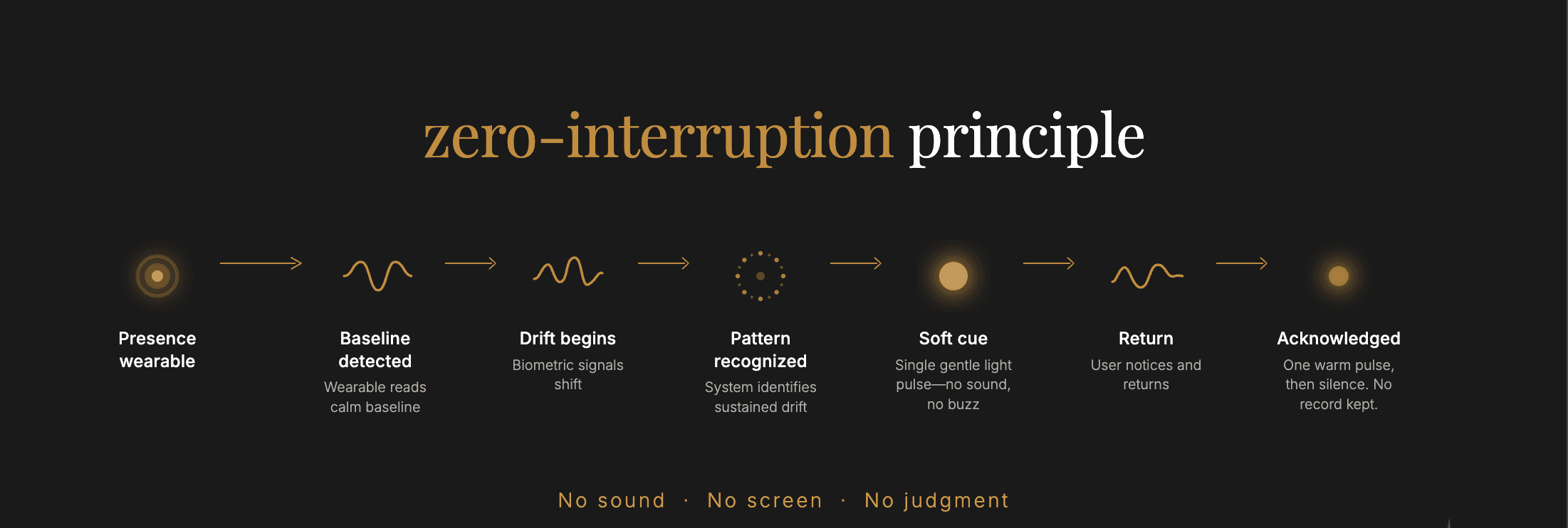
As the concept matured, the compass became the logic underneath and the firefly became the face of it: a small light that gently guides you back. We designed the interaction around a soft return moment instead of a notification.
01
The cue
One private signal through the wearable — subtle enough that only you notice.
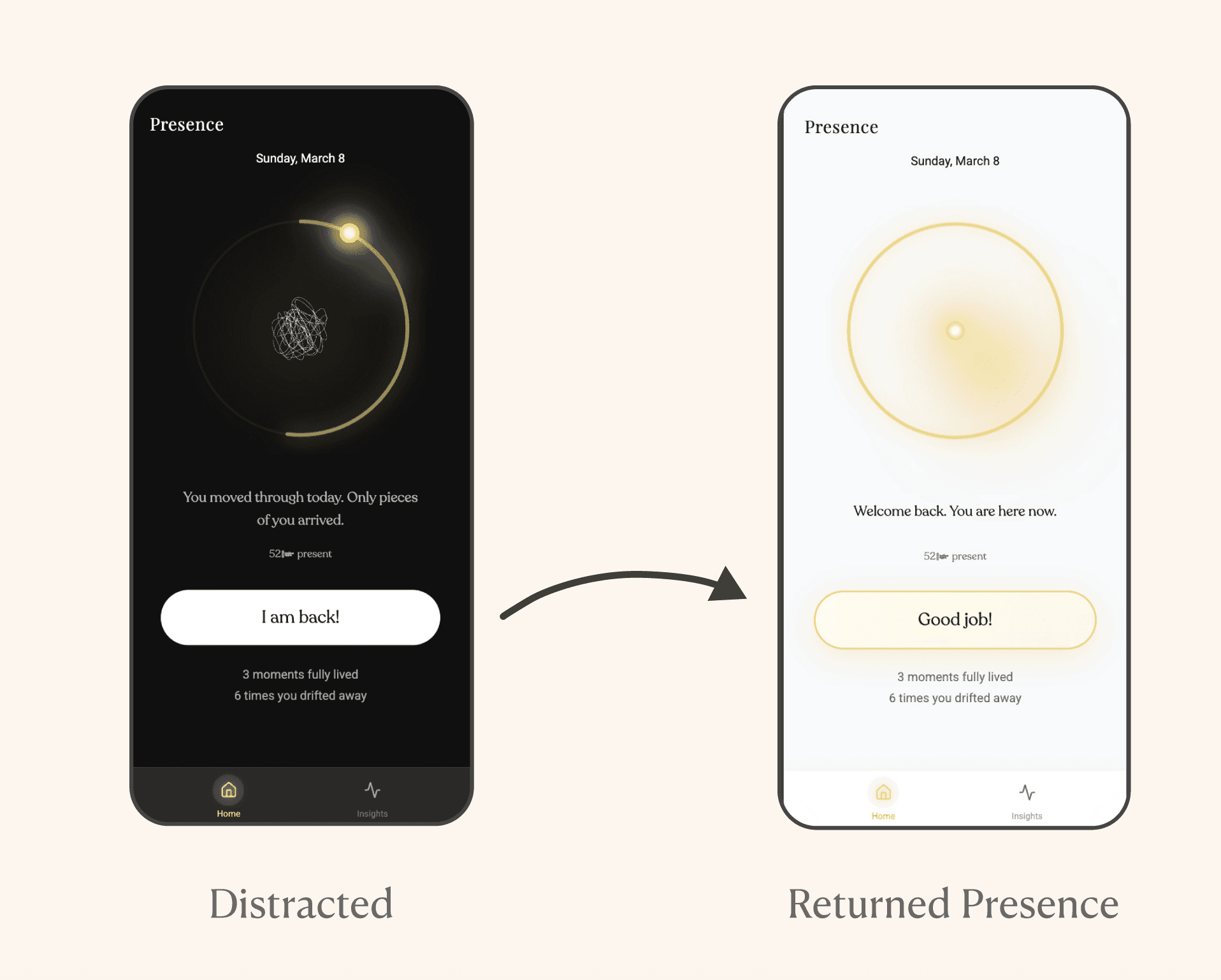
02
The return
A warm acknowledgment when you come back, never a penalty for leaving.
03
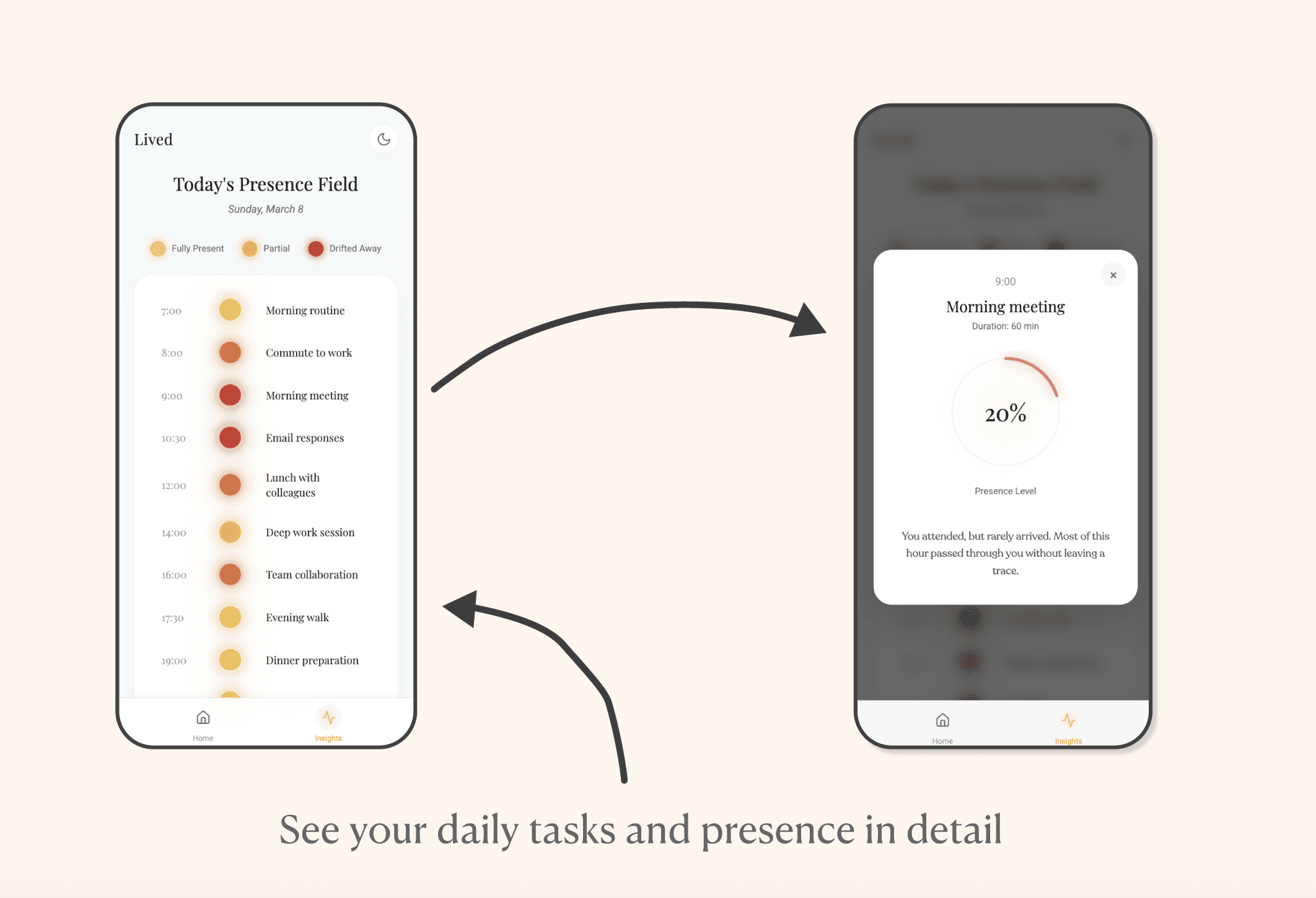
The companion app
Reflections, presence patterns and lived moments, in a calm visual language with no scores or streaks.
Firefly metaphor
Companion app
The return moment
Companion app
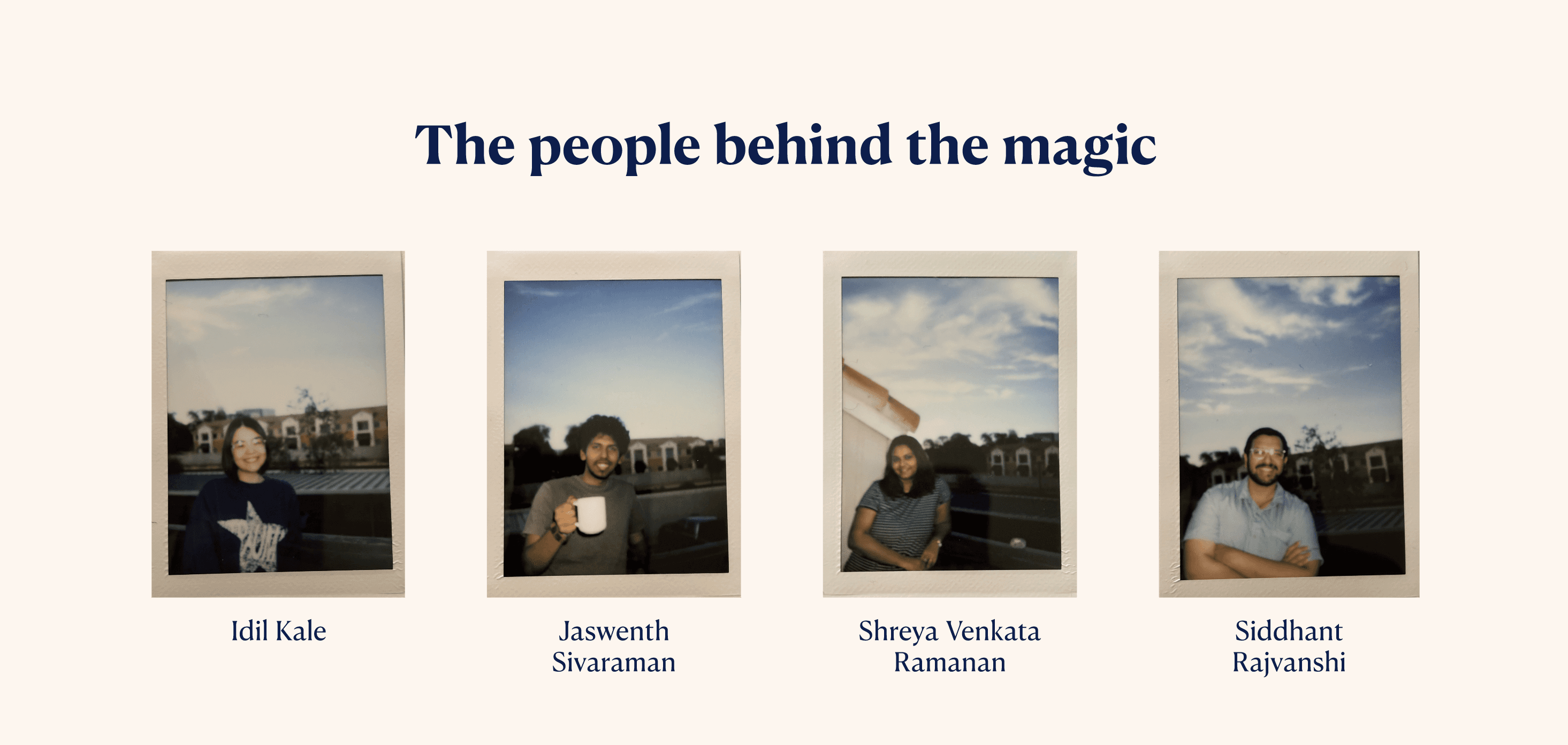
The team
Challenges
Making the invisible understandable
01
Defining the problem
The space was huge. Staying with the problem longer meant rejecting good-looking ideas that didn't address it.
02
Not a productivity tool
Every idea got the same question: does this help someone notice, or just push them to perform?
03
Not a surveillance tool
Detecting attention is sensitive. The cue had to stay private, and the app had to feel supportive, never judgmental.
What's next
What's next
What we delivered
- A speculative concept and interaction model
- A Figma Make prototype of the wearable states and companion app
- A visual identity built around the firefly metaphor
What I'd explore next
- How people interpret the cue: supported or interrupted?
- When drifting is good — creative thinking, reflection, rest — and how the system should tell intentional shifts from unnoticed drift
- More contexts: conversations, study, rest and transitions
Reflection
What this project taught me
Presence taught me that designing for something invisible takes more clarity, not less. A strong metaphor wasn't enough; the interaction, the emotional tone and the visual system all had to say the same thing. And the best ideas came from staying with the problem long enough to see what it actually was.