Human Systems Engineering · Interface Design
SkyStruct
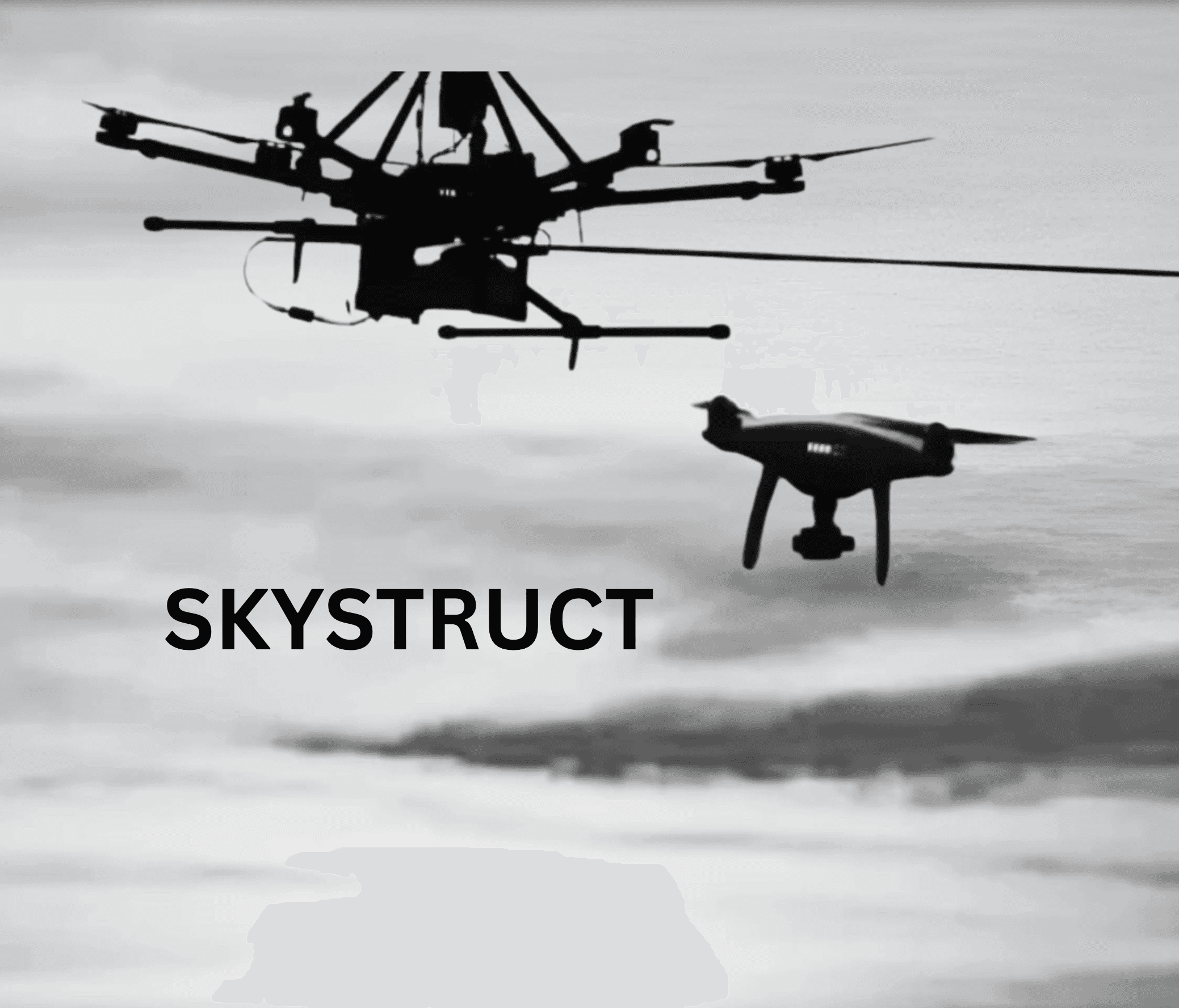
A human-centered drone inspection system for urban façades, built around three operator roles and ground stations designed for 12-hour missions.
Problem
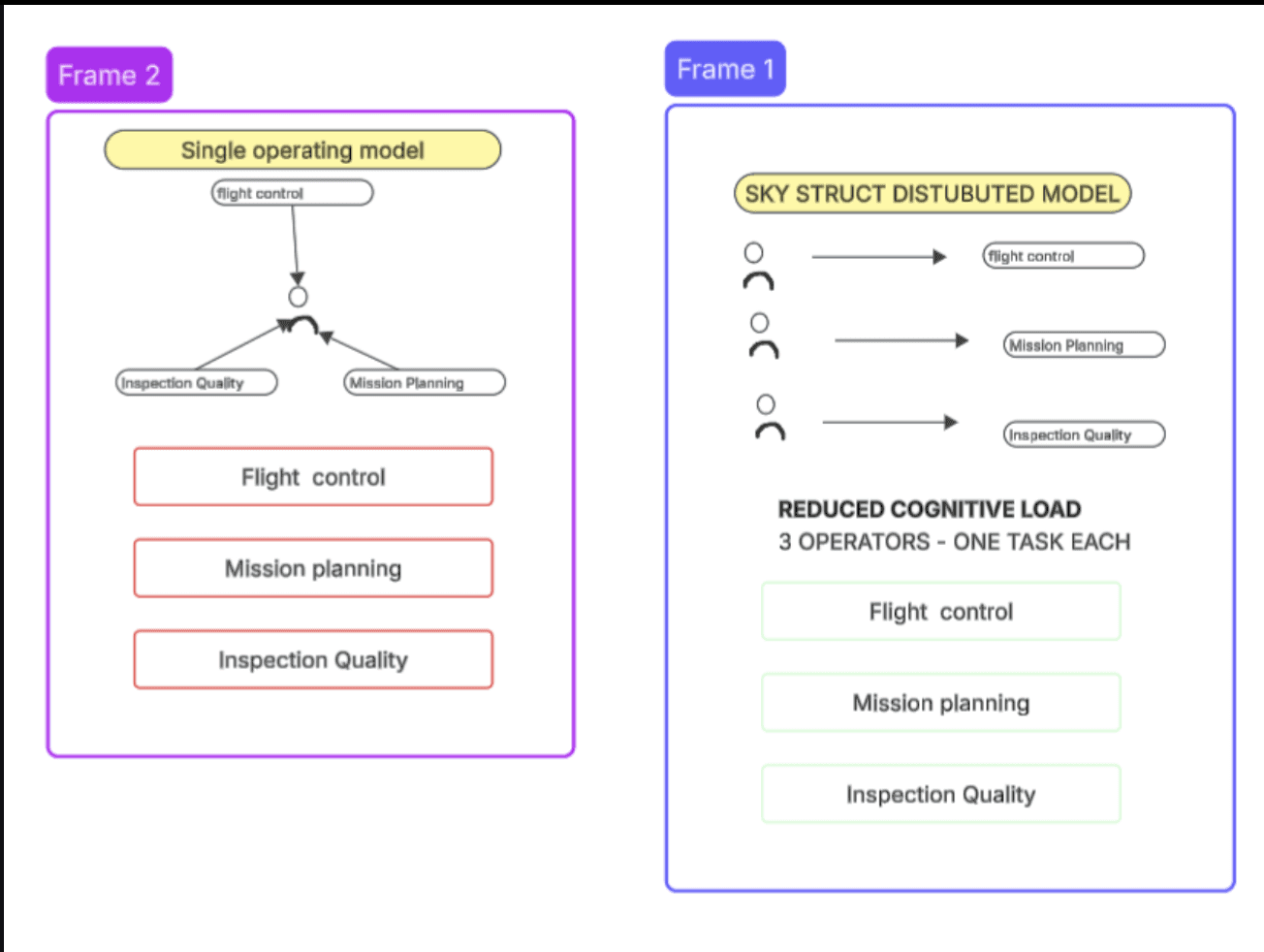
In most drone systems, one operator flies, avoids obstacles and checks inspection quality all at once, for missions up to 12 hours long. In a dense city, one missed alert or one split second of divided attention is the gap between safe and not.
Solution
We split the job across three roles (Pilot-in-Command, Navigator and Payload Operator), each with its own interface. We built a four-level alert system based on aviation standards, and designed the workstation itself for endurance.
Context
The Challenge
Façade inspections used to mean scaffolding and rope access. Drones made that safer, but most drone systems simply moved the risk from the building to the operator. SkyStruct distributes responsibility so automation assists the work while humans keep every critical decision.
Critical
Too much on one person
When one person manages everything, the most important tasks get less attention exactly when they need more.
Critical
No room for slow decisions
Tight urban spaces don't allow hesitation. The right action has to be obvious and fast.
Major
Nobody designed for 12 hours
Attention drifts, reaction time slows and posture degrades, but no existing system treated endurance as a design input.
Discovery
The Problem Wasn't the Drone
We looked at how the brain handles sustained stress and attention, and at how existing drone systems were actually used. The pattern was the same in both: systems were designed around what the drone could do, never around what the person operating it could handle.
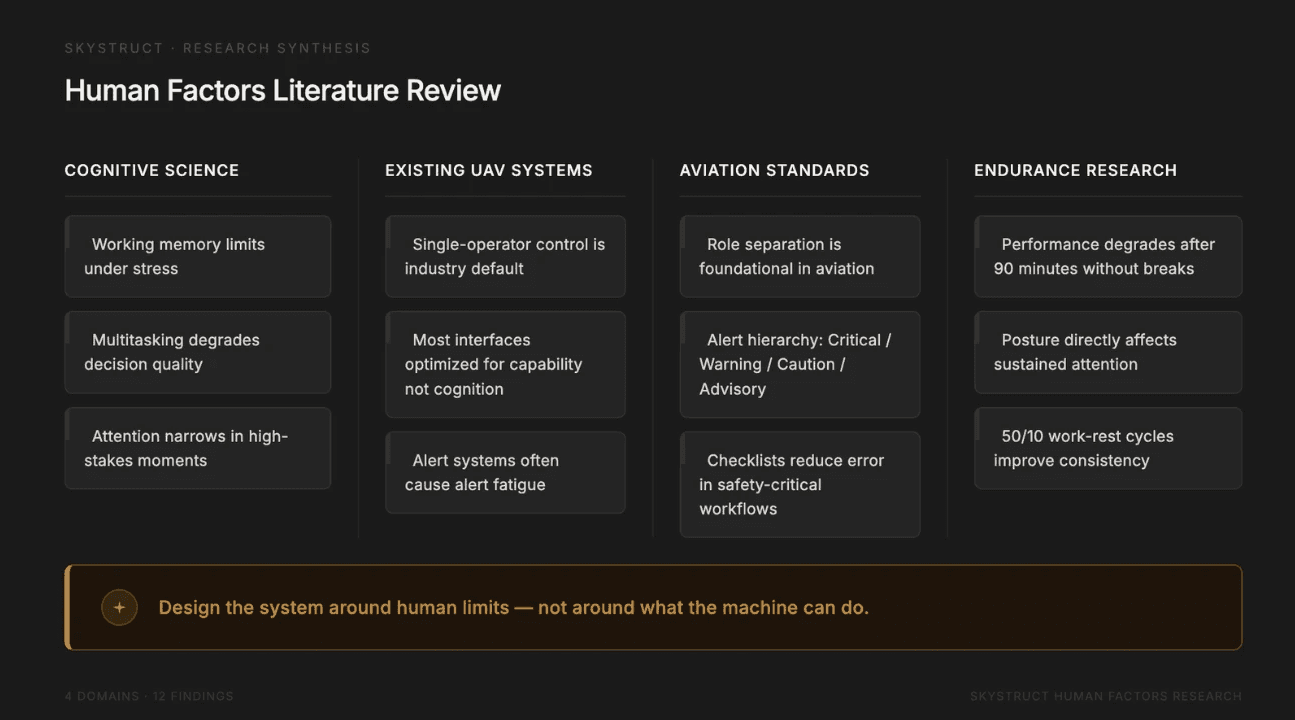
I wasn't trying to design a better drone interface. I was trying to solve a human problem inside a safety-critical system.
Design Goals
Five Goals That Shaped Every Decision
01
Safety first
humans always hold final authority over flight-critical and emergency decisions.
02
Reduce the mental load
spread responsibilities so no one person tracks everything.
03
Make automation trustworthy
it assists and never surprises.
04
Make the important things obvious
critical information is never hidden or open to interpretation.
05
Design for the long haul
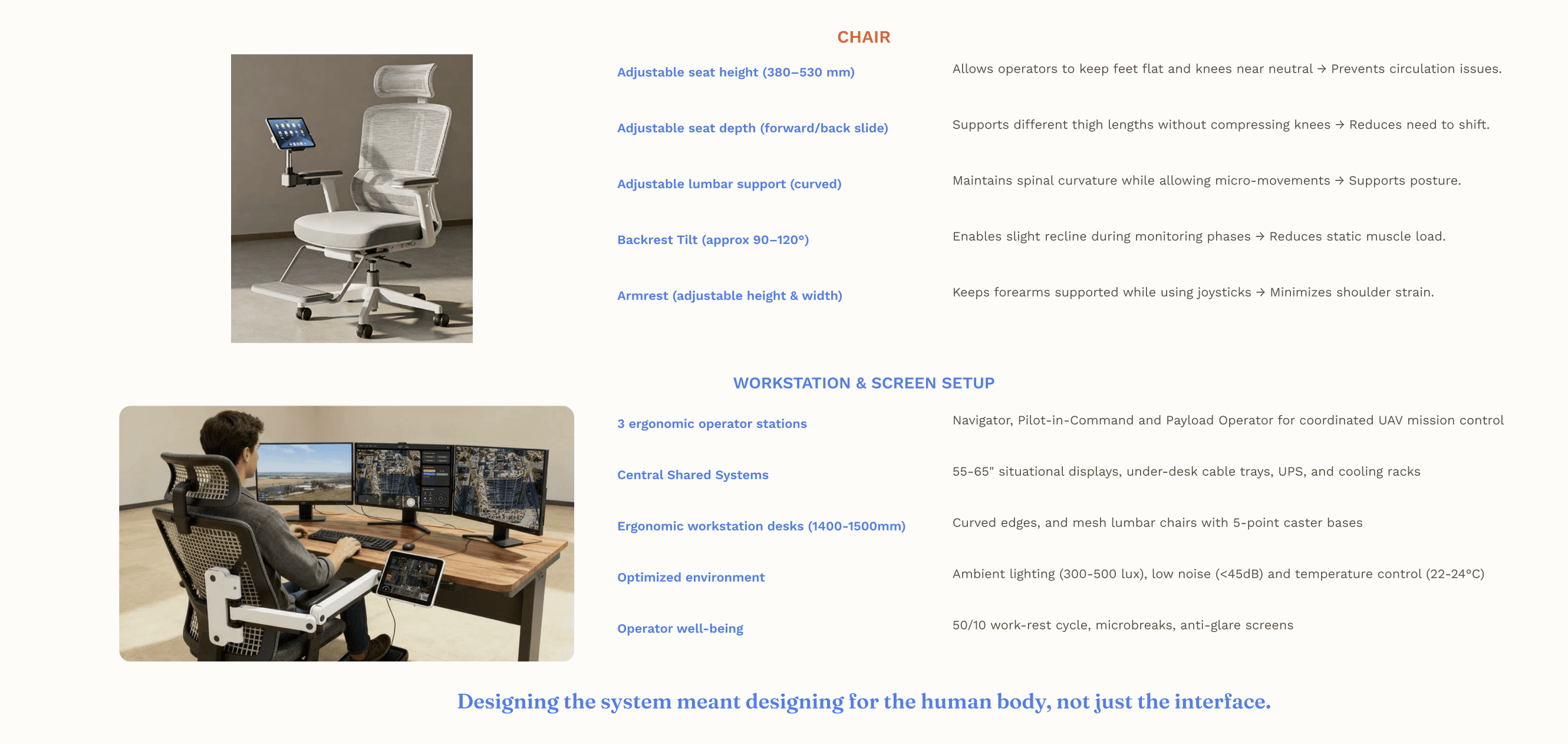
screens, chairs, lighting and rest cycles all support 12 hours of work.
Ideation
Three People, Each Doing One Thing Well
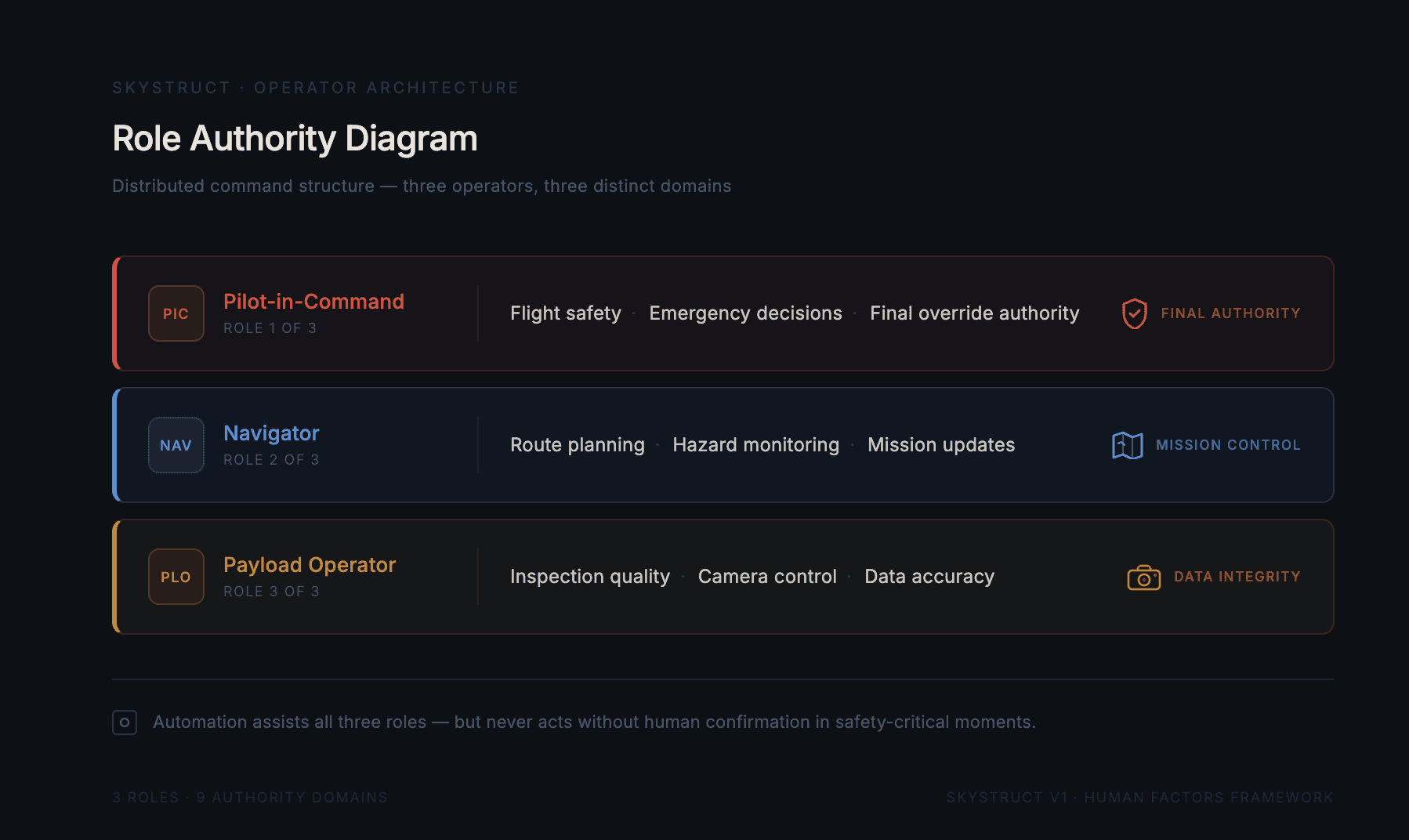
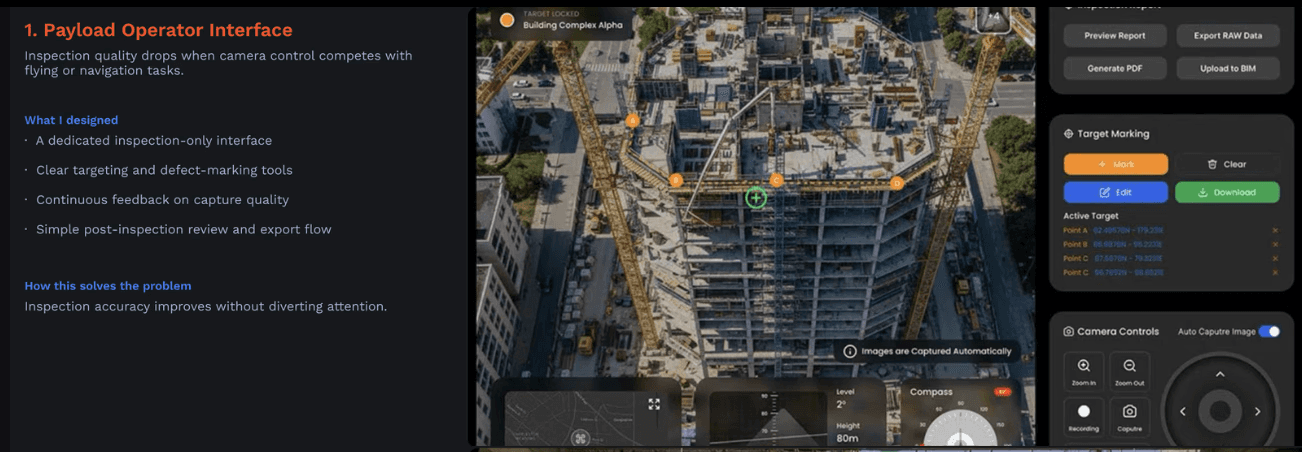
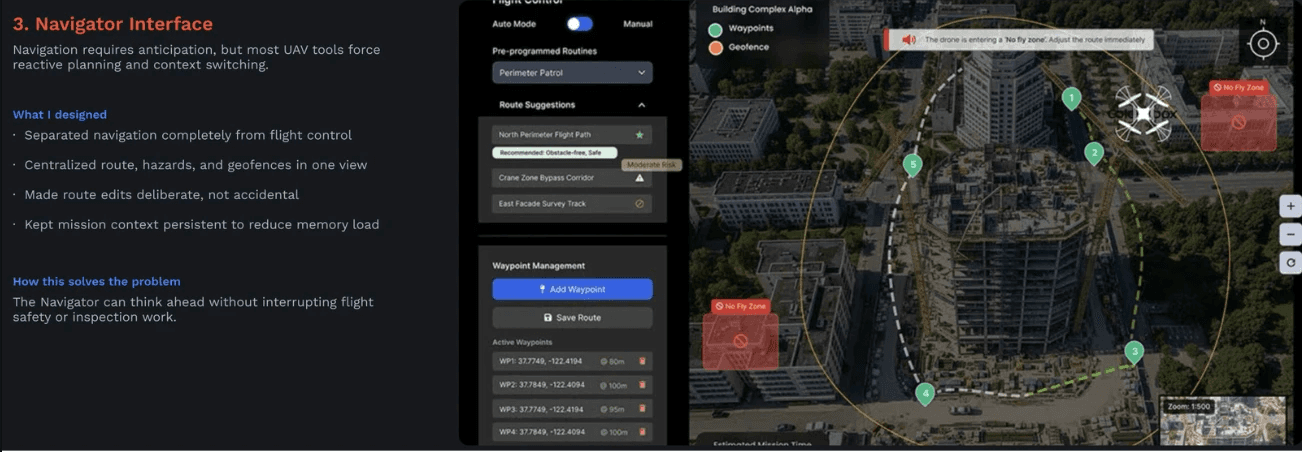
The key decision wasn't how the screens looked, it was who owned what. The Pilot-in-Command owns flight safety and every emergency. The Navigator owns the route and stays ahead of hazards. The Payload Operator owns the inspection itself and never touches flight.
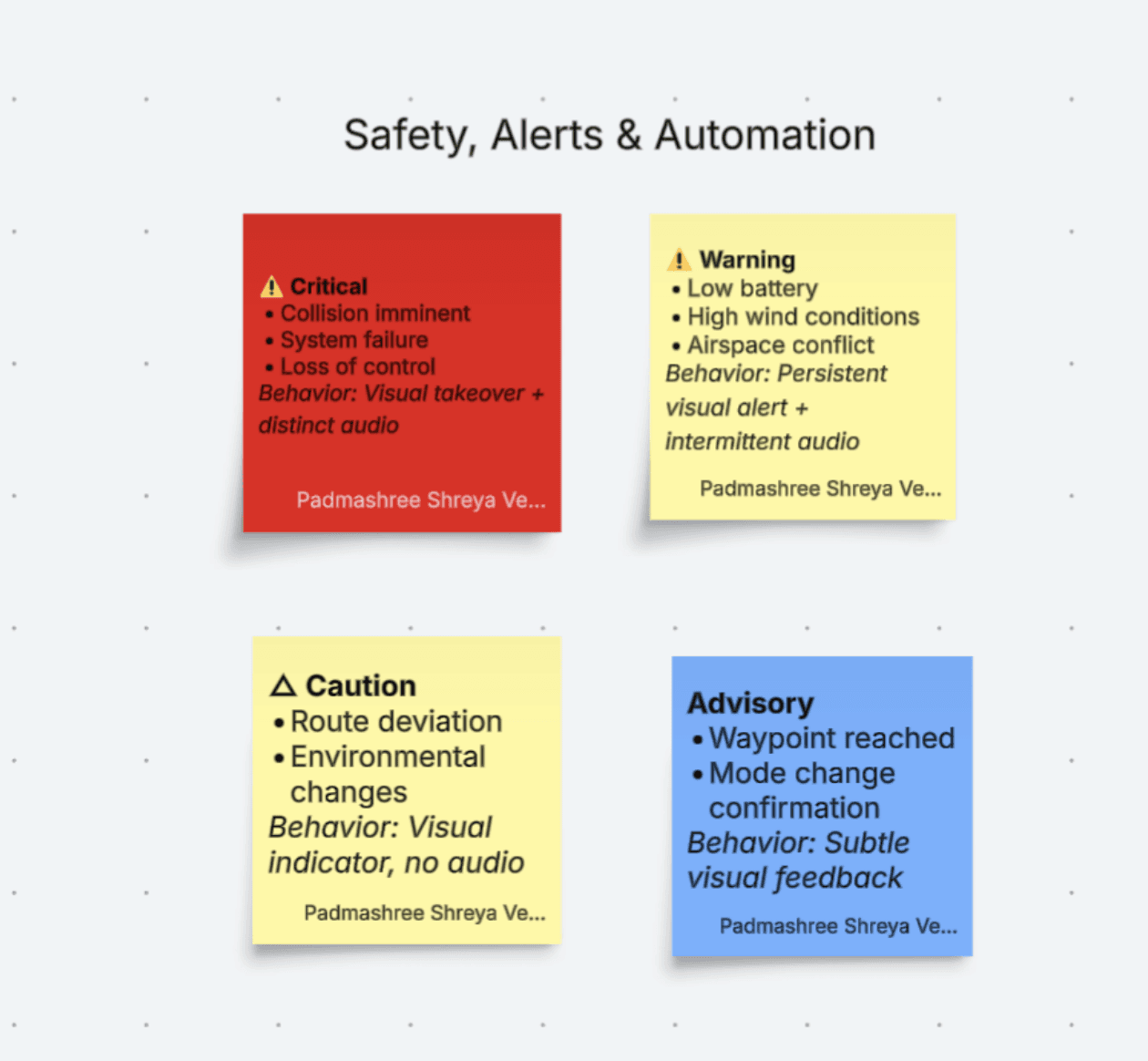
Alerts got the same care. Too many alerts are as dangerous as too few, so the system uses four levels (Critical, Warning, Caution and Advisory), each with its own color, sound and urgency, so trained operators can respond on instinct.
Concept 1 / 2
Design
Three Interfaces, One Ground Station
Pilot-in-Command
Navigator
Payload Operator
Trade-offs
Every Decision Had a Cost
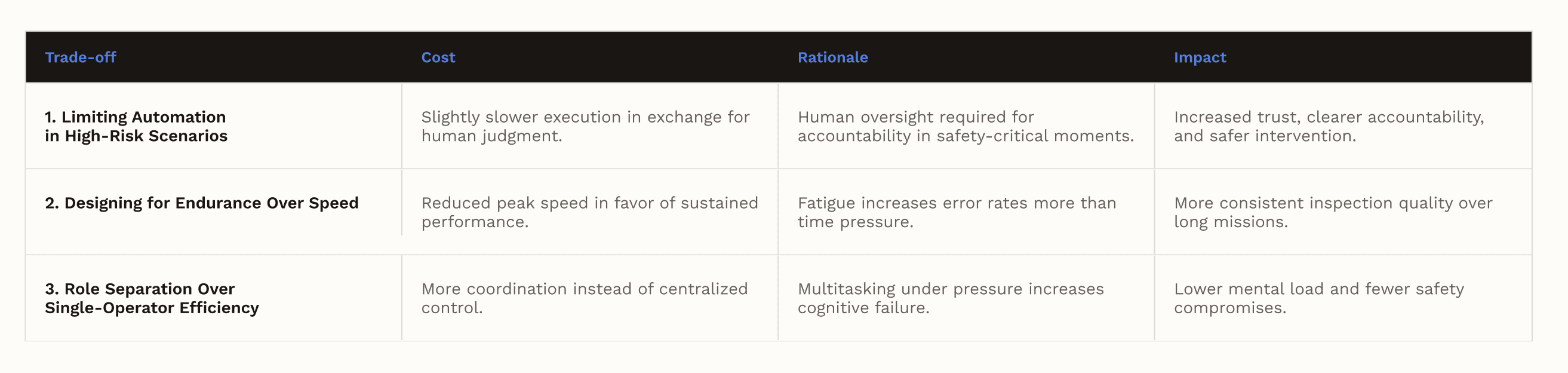
Keeping humans in control means slightly slower responses than full automation, which we accepted in exchange for safety and accountability. Designing for endurance over peak speed gives steadier performance across 12 hours. Three roles take more coordination, but they remove the overload that makes single-operator systems fail.
Deliverables
What We Delivered
Role structure
Pilot-in-Command, Navigator and Payload Operator with clear authority lanes.
Alert hierarchy
Critical, Warning, Caution and Advisory, based on aviation standards.
Operator interfaces
Three purpose-built screens, one per role.
Ground station spec
Ergonomics, lighting, noise and a 50/10 work–rest cycle.
Outcome
What's Next
What was delivered
- Three operator interfaces (Pilot-in-Command, Navigator, Payload)
- A 4-level alert hierarchy
- An ergonomic ground-station spec with a built-in work–rest cycle
What I'd test next
- Simulate a mission with trained operators
- Test alert recognition time under fatigue
- Validate the three-role handoffs in an emergency scenario
Reflection
What this project taught me
SkyStruct taught me that in safety-critical work, the interface is only one piece of the system. Designing around human limits meant thinking about roles, alerts, chairs and rest breaks as seriously as screens.